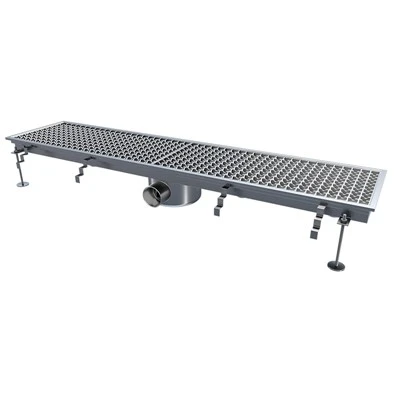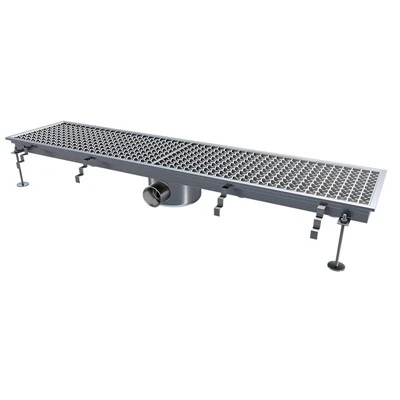


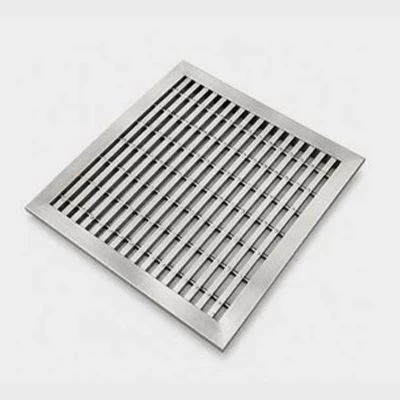
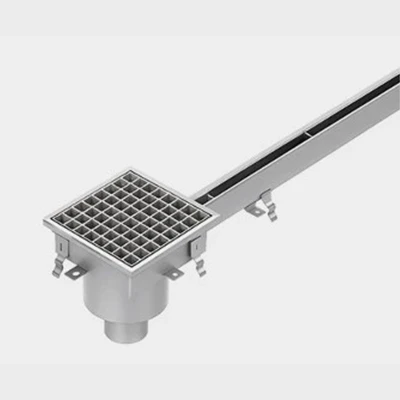

As building design and urban infrastructure continue to evolve, surface drainage channels are being used in a growing range of residential, commercial, industrial and outdoor environments. Their extended collection profile, reliable drainage performance and flexible layout make them well suited to areas where large volumes of surface water need to be collected and discharged efficiently. By capturing runoff along a continuous drainage line, these systems can help reduce standing water and improve overall site drainage.
In residential properties, surface drainage channels are commonly installed around patios, terraces, garage entrances, balconies and other areas exposed to rainfall. Positioning a drainage channel along a low point or near the edge of a building can help collect runoff before it reaches interior spaces or accumulates around the structure. In patios and landscaped areas, the channel can also be integrated with tile, stone and other paving materials to maintain a clean and cohesive appearance.
Commercial buildings and public facilities often contain extensive paved areas, including shopping center entrances, office building surroundings, hotel courtyards and pedestrian walkways. Heavy rainfall can generate significant surface runoff across these areas, making efficient collection essential. Surface drainage channels can capture water along a continuous inlet and direct it into the connected drainage network. Grate designs that complement the surrounding architecture can also reduce the visual impact of the drainage system.
Industrial facilities and warehouses typically require dependable drainage because production areas, loading zones and service roads may be exposed to rainwater, cleaning water and other surface runoff. Channel locations and dimensions can be selected according to the site's catchment area and expected flow rate. Proper planning helps reduce standing water that could interfere with production activities, material handling or vehicle movement.
Parking areas, roadways and underground garage entrances are also common applications. These locations may experience both heavy rainfall and vehicle traffic, so the channel and grate should be selected according to the expected load conditions. The drainage layout should be coordinated with the surface gradient so that runoff can enter the channel efficiently and be discharged without unnecessary delay.
In landscape projects and public recreational areas, drainage channels need to balance hydraulic performance with visual integration. Park walkways, plazas, landscaped platforms and outdoor gathering areas can use concealed or low-profile drainage designs that blend more naturally with the surrounding environment.
Surface drainage channels can also be used around sports facilities, schools, transportation facilities and other large public spaces. Each application requires consideration of factors such as expected water volume, environmental exposure, traffic conditions, maintenance requirements and frequency of use.
Overall, surface drainage channels offer strong adaptability across a wide range of environments. From residential gardens and commercial plazas to industrial facilities, parking areas and public infrastructure, their continuous collection design can provide effective surface water management. As modern construction places greater emphasis on drainage efficiency, safety and visual integration, surface drainage channels are expected to remain an important solution for managing runoff in diverse environments.